A personal project I’ve been working on for the last few years. I love the diversity and skills in portuguese tiles so decided to start this personal project to find out more about them
Tiles
Why am I doing this?
I've been obsessed with tiles since I can remember.
I grew up in Lisbon and studied in Caldas da Rainha, a town known for its ceramics, particularly the famous Cabbage bowls you've probably seen around. Tiles are literally everywhere in Portugal, and we, Portuguese people, are so used to them that we don't even notice them. It was only after moving to Manchester that I started really paying attention because I was mostly surrounded by bricks (nothing against it, I love a good brick).
I've been living in Manchester for over a decade but I still travel to Portugal regularly, and at some point I started photographing tiles I liked. What began as wanting to capture them, turned into wanting to learn more about the different styles, understanding where they came from and documenting them properly.
A big reason why I wanted to do this was because they're disappearing due to a few different factors. Gentrification in big cities, particularly in Lisbon, has been quite aggressive in the last few years and is stripping facades; buildings get renovated and the historical tiles don't make it; and there's a more recent issue: tourists stealing tiles off walls to take home as souvenirs.
Tiles are a part of the Portuguese DNA and tell a history of its people but they are getting lost in real time which makes me incredibly sad. Researchers have already spent decades building digital catalogues to document these patterns before they're lost. My way to paying homage and help making the patterns live on was not only to record them but to recreate them digitally so they can live on.
Here’s the area I’ve covered so far:
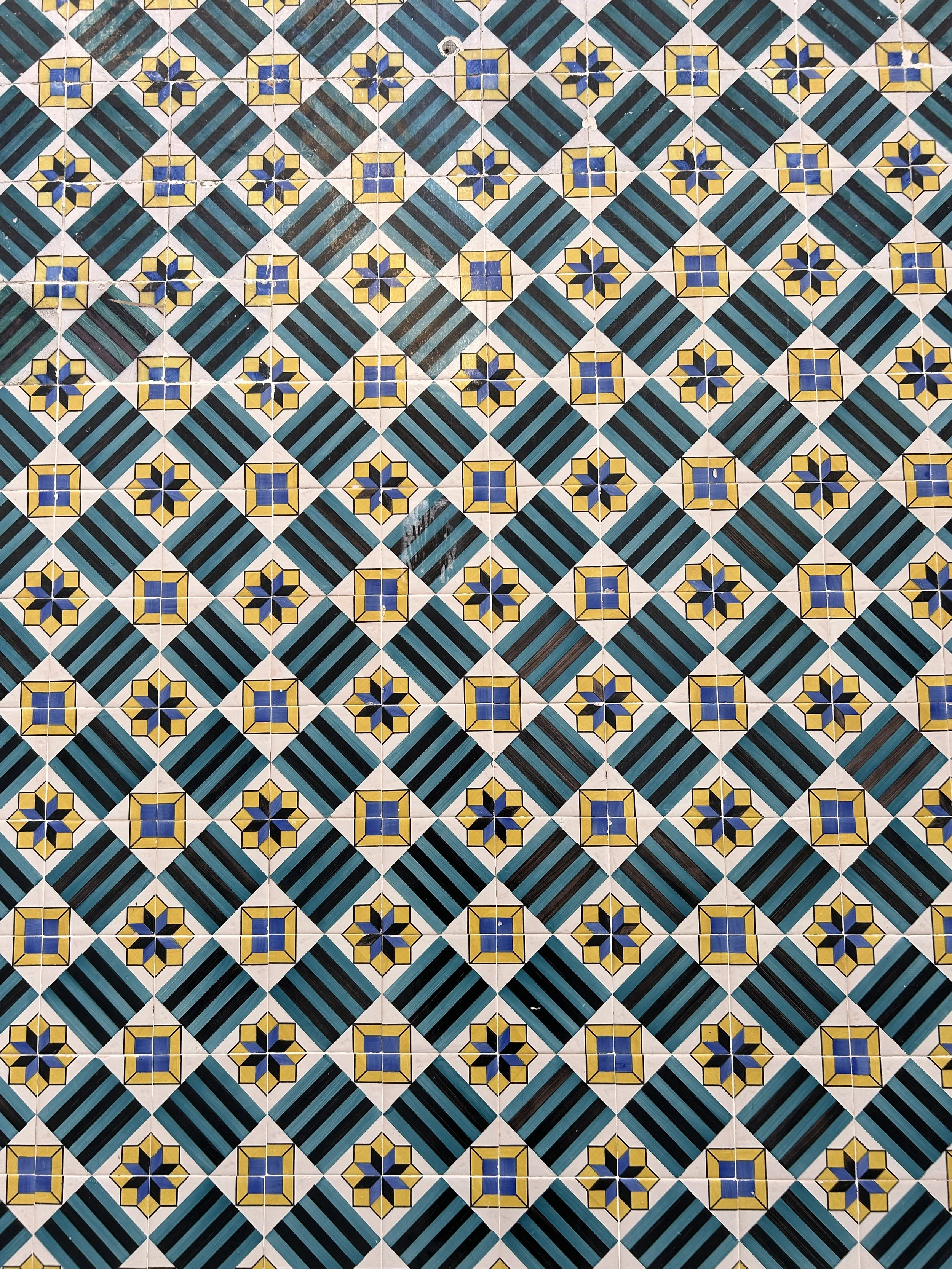
Restaurant Adamastor
R. Mal. Saldanha 22, 1200-109 Lisboa, Portugal
I couldn’t tell you how many times I’ve walked past this restaurant growing up whilst on my way to Santa Catarina’s Viewpoint where I used to drink litrosas (cheap 1l portuguese beer bottles) with my mates.
I couldn’t find much information about the restaurant (which I’ve never been to, crazily enough) but I found information about the tiles’ style.
This is a classic Lisbon geometric style which was mass-produced during the second half of the 19th century when industrialisation enabled factories in Lisbon, Porto and Gaia to produce millions of tiles for exterior building cladding.
Floral patterns are particularly prevalent in Portuguese tiles, symbolising growth, beauty and the connection between humanity and the natural world: a reminder of the importance of nature in Portuguese culture.
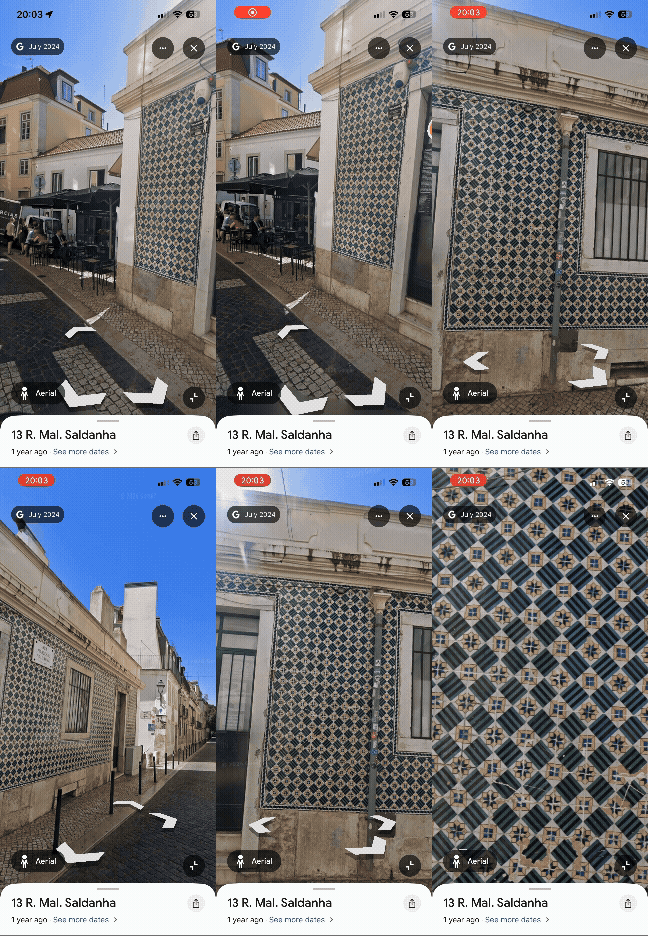

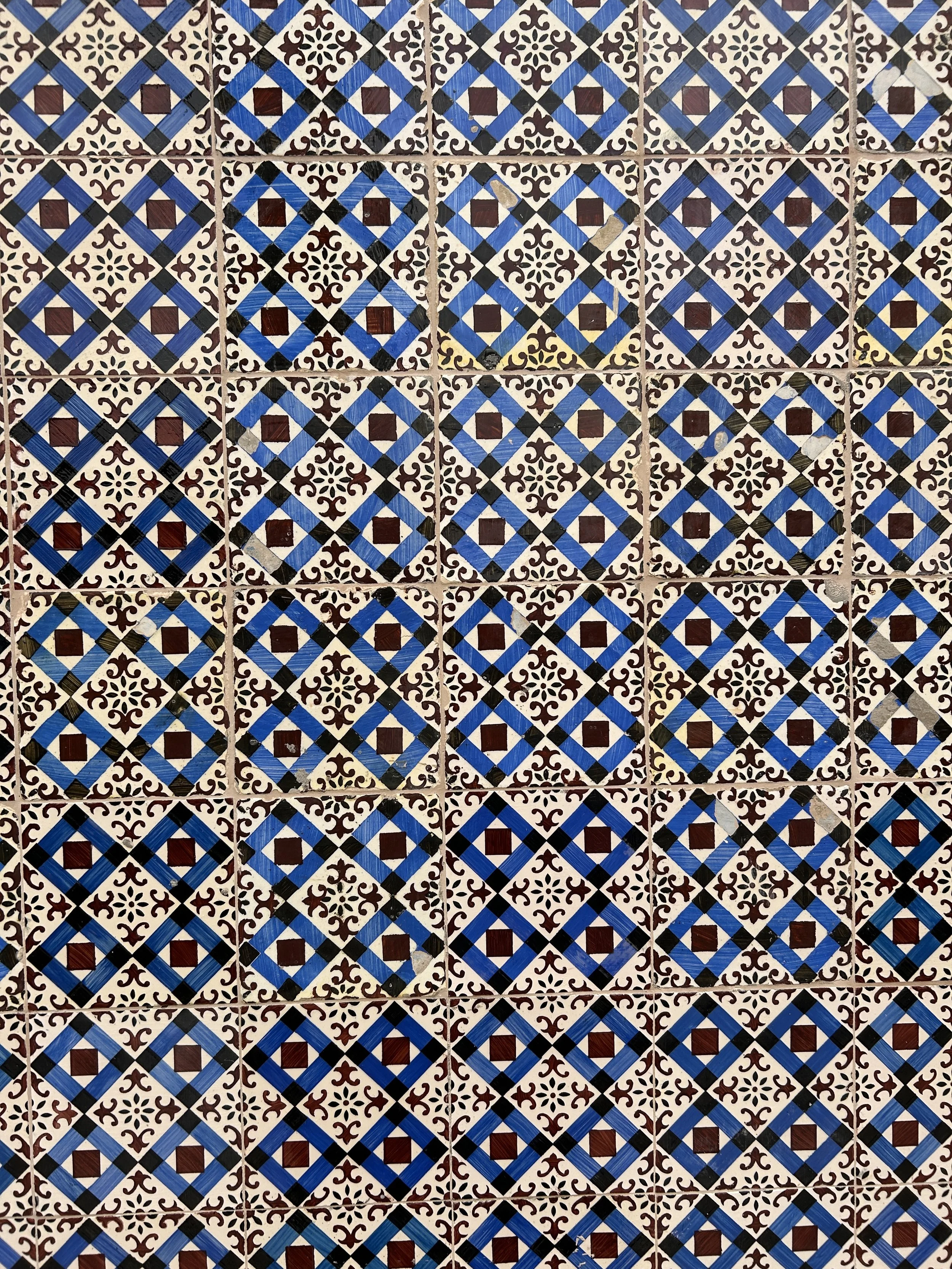
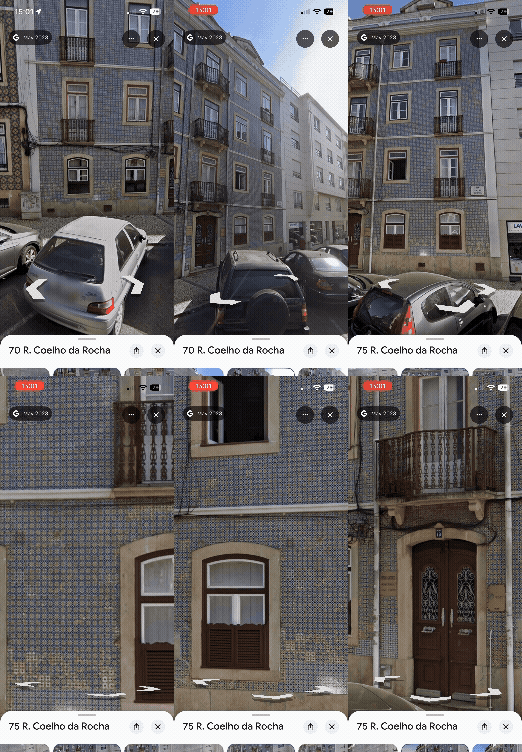
R. Coelho da Rocha 75, 1350-133 Lisboa, Portugal
Campo de Ourique
I saw these gorgeous tiles when I was on my way to buy a chocolate cake with my mom (I remember this because the cakes are really good and the only reason why I would be in Campo de Ourique 🌝).
The building seems the be used as office spaces nowadays and is located in an upscale part of Lisbon known for keeping its old character and famously where Fernando Pessoa, one of Portugal’s most famous writers (and one of the best in the world in my modest opinion), spent his last years.
Just like the Adamastor’s tiles, these are a classic industrial repeat pattern, almost certainly from the late 19th century (Campo de Ourique was built out almost entirely between 1880–1920) and typical of what factories in Lisbon, Porto, and Gaia were mass-producing for residential facades at the time.
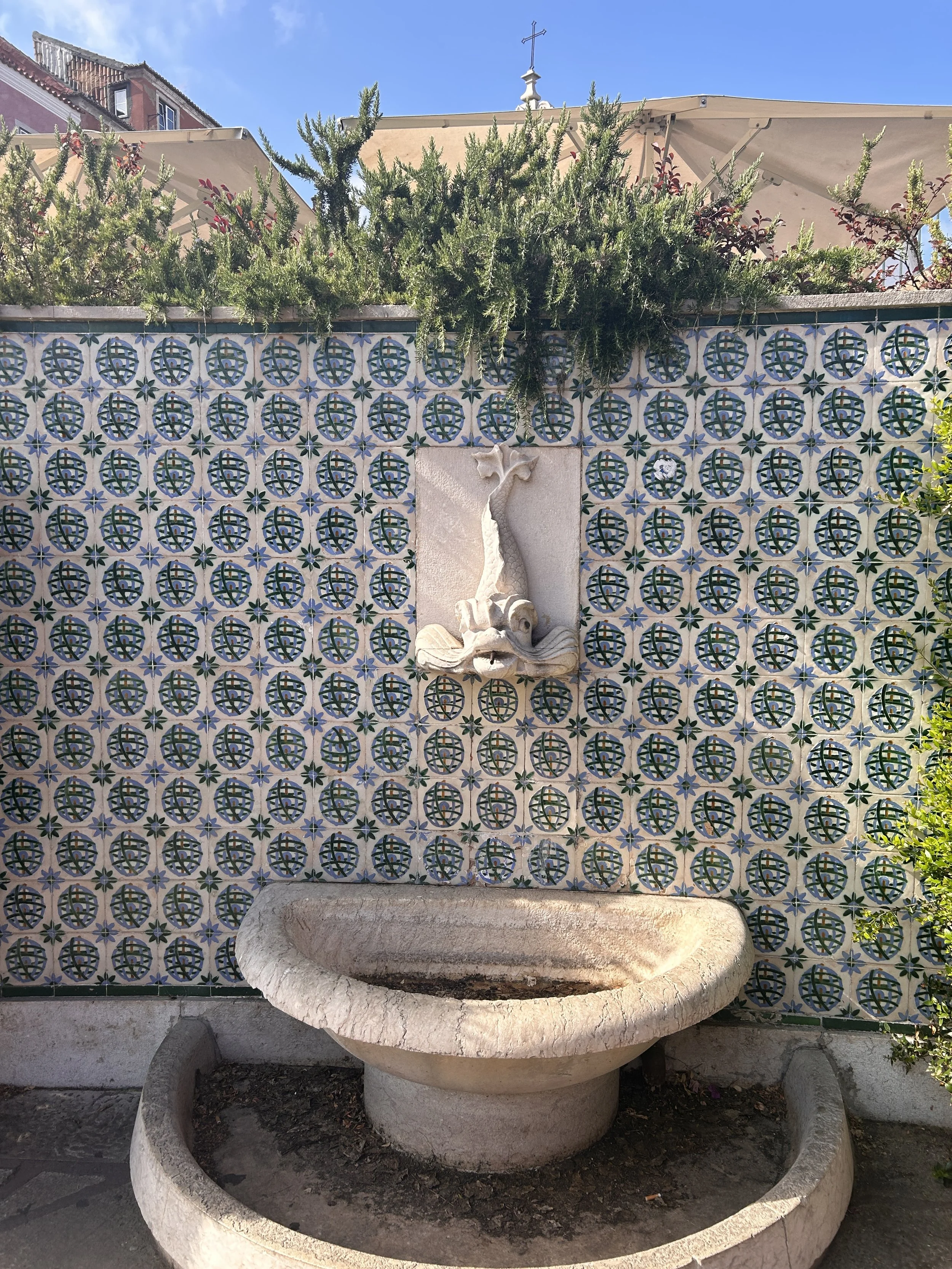
Jardim Júlio de Castilho
Largo de Santa Luzia, 1100-487 Lisboa, Portugal
I couldn’t tell you how many times I’ve walked past this restaurant growing up whilst on my way to Santa Catarina’s Viewpoint where I used to drink litrosas (cheap 1l portuguese beer bottles) with my mates.
I couldn’t find much information about the restaurant (which I’ve never been to, crazily enough) but I found information about the tiles’ style.
This is a classic Lisbon geometric style which was mass-produced during the second half of the 19th century when industrialisation enabled factories in Lisbon, Porto and Gaia to produce millions of tiles for exterior building cladding.
Floral patterns are particularly prevalent in Portuguese tiles, symbolising growth, beauty and the connection between humanity and the natural world: a reminder of the importance of nature in Portuguese culture.

Cafe Klandestino
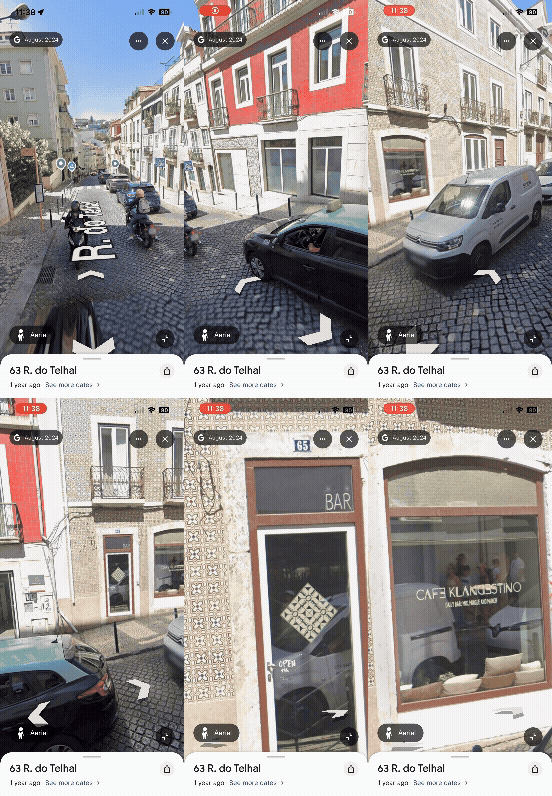
R. do Telhal 65, 1150-345 Lisboa, Portugal
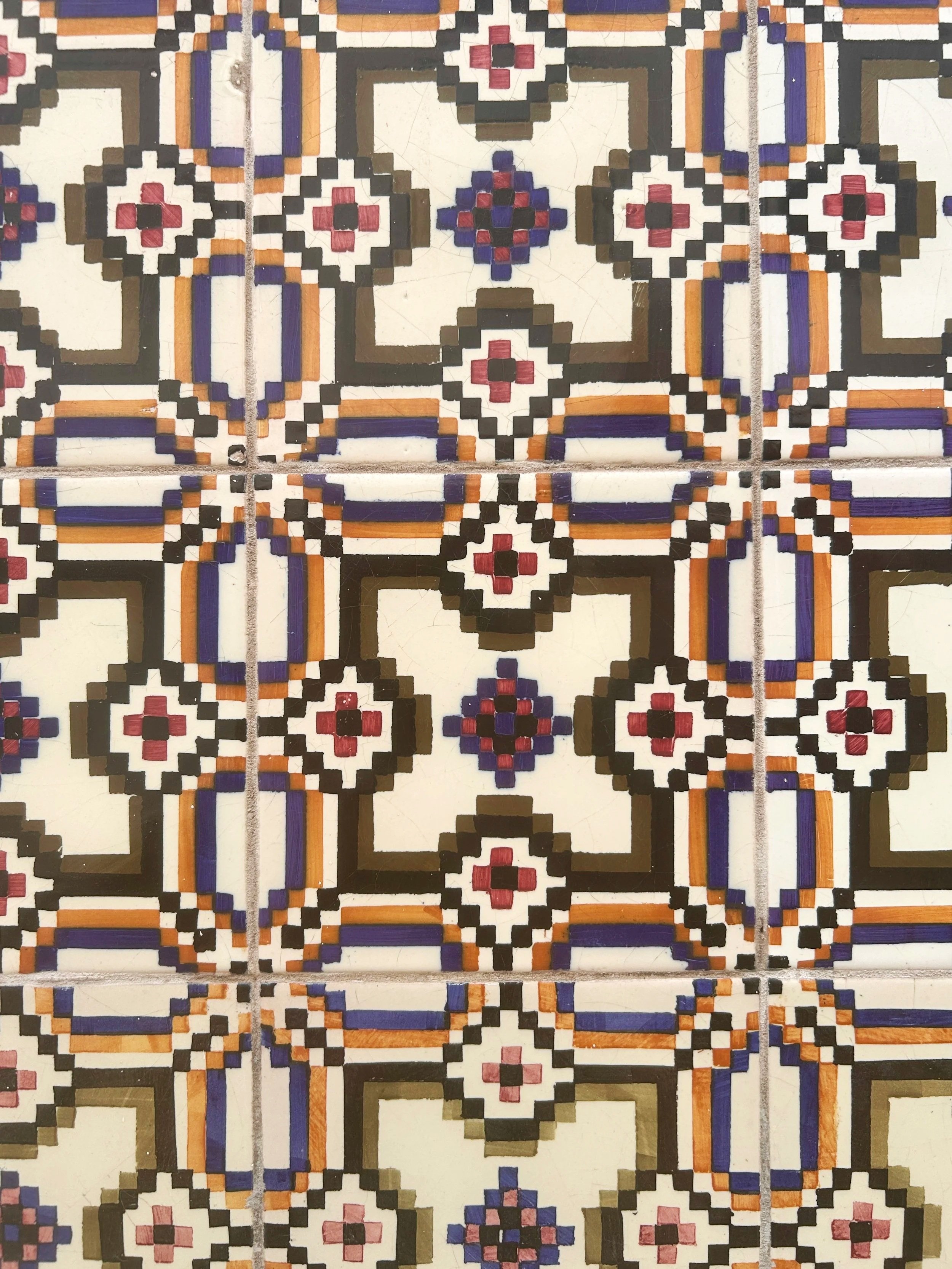
These tiles sit on Cafe Klandestino’s building’s facade in Rua do Telhal which is near a part of Lisbon known for it’s South Asian population. This is a mainly residential area with restaurants and bars that don’t attract much tourist attention, being mainly used by the residents.
Like the previous tiles, this is another 19th century industrial pattern but very different from the previous ones, both in pattern and in colours. Although dating from the late 19th century, the pattern is heavily influenced by Moorish style, a design language with deep roots in Portugal, particularly in the south. The Moorish influence was strongest in the Alentejo and Algarve, but are also very present in Lisbon particularly in Sintra.
The variety of styles produced during this era is astounding and shows how versatile tiles can be.
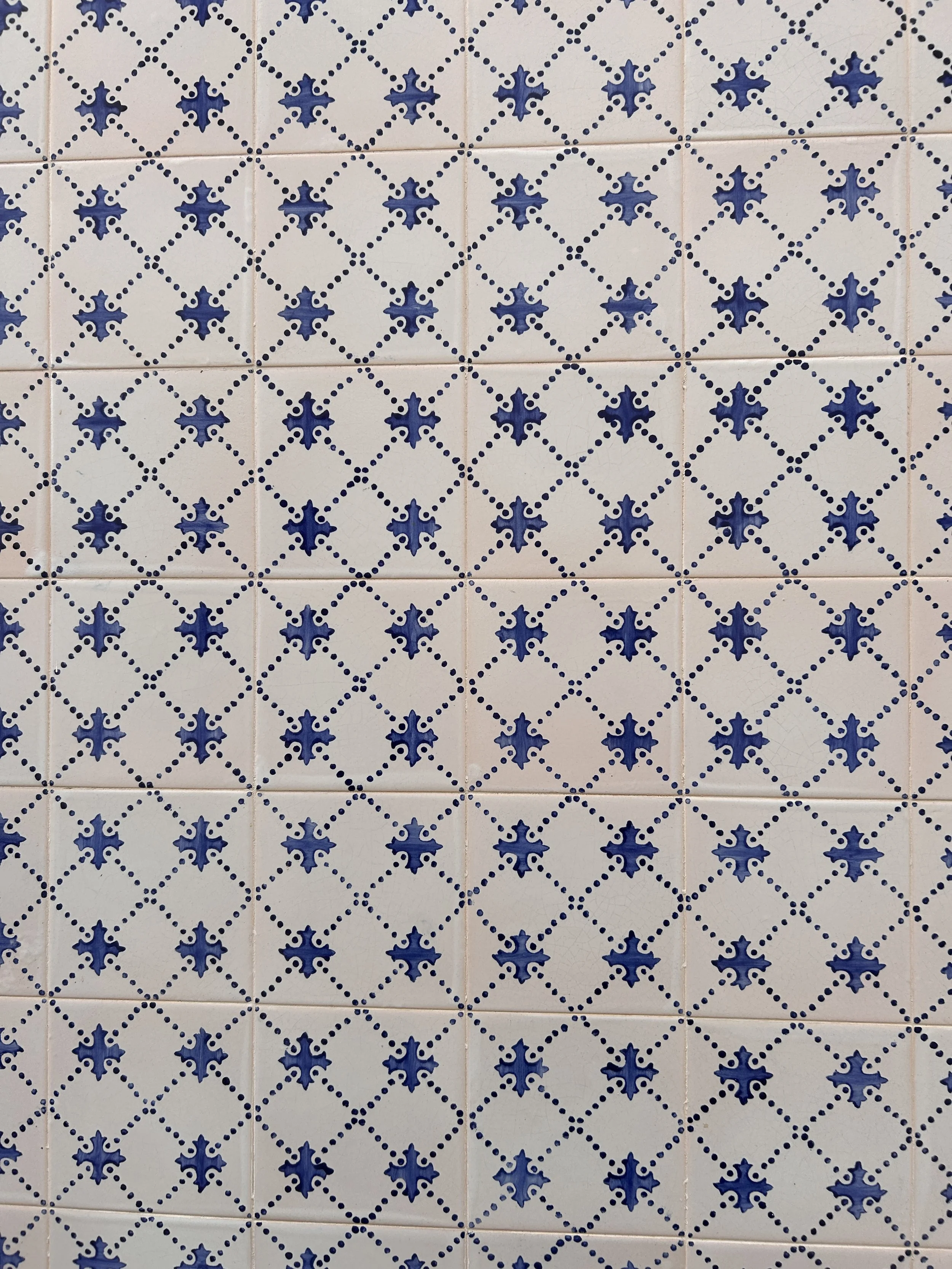
Av. Dr. Cândido Madureira 8, 2300-531 Tomar, Portugal
Avenida Dr. Cândido Madureira
I couldn’t tell you how many times I’ve walked past this restaurant growing up whilst on my way to Santa Catarina’s Viewpoint where I used to drink litrosas (cheap 1l portuguese beer bottles) with my mates.
I couldn’t find much information about the restaurant (which I’ve never been to, crazily enough) but I found information about the tiles’ style.
This is a classic Lisbon geometric style which was mass-produced during the second half of the 19th century when industrialisation enabled factories in Lisbon, Porto and Gaia to produce millions of tiles for exterior building cladding.
Floral patterns are particularly prevalent in Portuguese tiles, symbolising growth, beauty and the connection between humanity and the natural world: a reminder of the importance of nature in Portuguese culture.
